

Founder, HealthAfter55.com — Richard researches natural health strategies for adults over 55, with a focus on blood sugar, energy, and healthy ageing. He is not a medical professional. Always consult your doctor before making health changes.
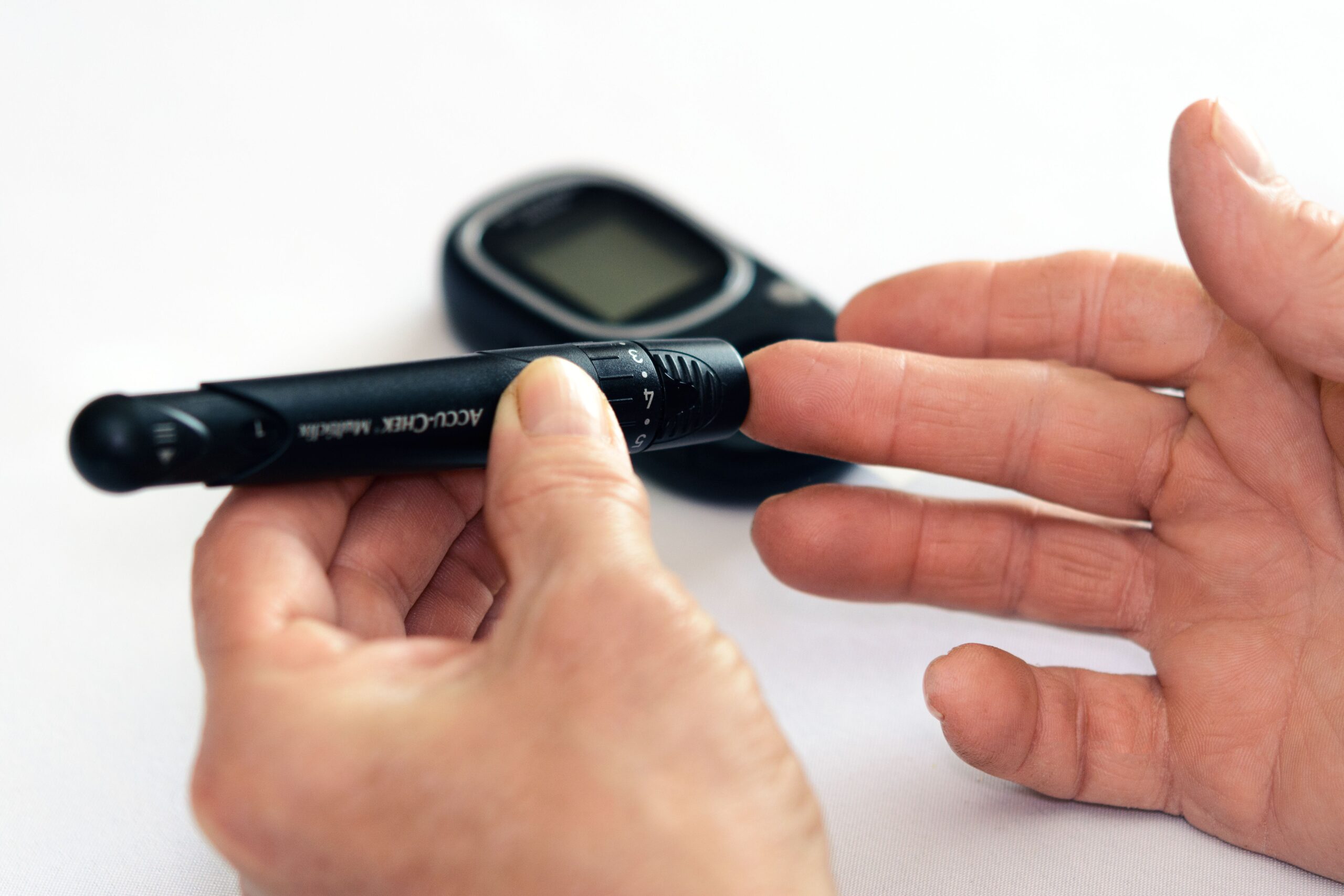
If you have been told your blood sugar is heading in the wrong direction, knowing how to test A1C levels at home could be one of the most practical steps you take this year. Waiting for a lab appointment every six months feels like a long time when you are actively trying to turn a number around — and for many adults over 55, that waiting is exactly what gets in the way of staying motivated and on track.
The good news is that at-home A1C testing has become genuinely accessible. You no longer need a laboratory or a doctor’s order to check your three-month blood sugar average. Home test kits are available at major pharmacies and online, results arrive in as little as five minutes, and when used correctly they can be reasonably accurate — close enough to be useful for tracking your progress between doctor visits.
This article explains exactly how at-home A1C testing works, what types of kit are available, how to get the most accurate result possible, and — critically — when a home result is reliable enough to act on and when it should send you straight to a lab instead. There are a few important caveats that most articles skip, and I will cover those honestly.
🗓️ Last reviewed and updated: June 2026
You can test your A1C at home using either an instant fingerstick kit (results in 5 minutes) or a mail-in kit (blood collected at home, analysed by a certified laboratory). Instant kits are convenient and reasonably accurate when used correctly, though a 2022 study found some commercially available home kits do not fully meet NGSP (National Glycohemoglobin Standardization Program) accuracy standards — the benchmark all certified laboratory tests must meet. Mail-in kits processed by CLIA-certified labs tend to be more accurate and are the better choice if you want to track A1C numbers precisely over time. Neither replaces a laboratory test ordered by your doctor, but both are useful tools for monitoring progress between appointments.
Get Our Free Guide: 7 Natural Ways to Help Support Healthy Blood Sugar After 55
Practical, research-backed strategies for adults over 55 — including how to interpret your A1C results and what to do next.
- What A1C Actually Measures — and Why It Matters After 55
- The Two Types of Home A1C Test — How They Differ
- Step-by-Step: How to Use a Home A1C Test Kit Correctly
- How Accurate Are Home A1C Tests? An Honest Answer
- Conditions That Can Make Your A1C Read Falsely High or Low
- How to Interpret Your Results — What the Numbers Mean
- How Often Should You Test at Home?
- Frequently Asked Questions
What A1C Actually Measures — and Why It Matters After 55
Before you test, it helps to understand what you are actually measuring. The A1C test — also written HbA1c or haemoglobin A1c — measures the percentage of haemoglobin in your blood that has glucose (sugar) attached to it. Haemoglobin is a protein inside red blood cells that carries oxygen. As blood sugar rises, more glucose sticks to it — and stays stuck for the life of that red blood cell, which is roughly 90 days.
This is what makes A1C so useful. Unlike a fingerstick blood sugar reading, which shows your glucose level at a single moment in time, A1C gives you the average picture over the past two to three months. You cannot fool it by eating well the day before. It reflects how your blood sugar has actually behaved, day and night, across that whole period.
After 55, A1C becomes a particularly important number. The CDC recommends A1C testing for all adults from age 45, and the American Diabetes Association extended that recommendation — adults of any age with risk factors for diabetes (including overweight or a family history) should be tested. For those already in the prediabetes range, annual testing is advised to monitor whether things are improving or progressing.
| Below 5.7% | Normal |
| 5.7% – 6.4% | Prediabetes range |
| 6.5% or above | Diabetes range |
| Below 7.0% (if diagnosed) | ADA target for most adults with diabetes |
Source: American Diabetes Association. Individual targets may vary — always discuss your specific A1C goal with your doctor.
It is worth understanding what a home test is and is not useful for. Testing at home gives you a meaningful data point for tracking your own trend over time. It is not intended to replace the laboratory test your doctor orders — which uses more precise equipment, processes a larger blood sample from a vein, and meets stricter quality benchmarks. The home result is a useful signal. The lab result is the definitive one.
The Two Types of Home A1C Test — How They Differ
When you search for home A1C kits, you will find two distinct types. They work differently, cost differently, and have different accuracy profiles. Understanding which suits your situation will save you money and frustration.
Type 1 — Instant Point-of-Care Test Kits
These kits work similarly to a home cholesterol or blood glucose monitor. You prick your finger, collect a small drop of blood, place it into the device or onto a test strip, and the kit analyses the sample on the spot. Results appear in about five minutes. The most widely available option in this category is the A1CNow SelfCheck, which is sold at major pharmacies, on Amazon, and through the American Diabetes Association’s online store. Each kit typically includes four tests — meaning four separate fingerstick readings — along with the analyser unit, lancets, and blood collectors.
The convenience is real. There is no mailing, no waiting, no online account required. You get your number immediately. The trade-off is that instant kits require a very small blood sample (typically 5 microlitres — about the size of a small sesame seed) and are sensitive to technique errors: squeezing the finger too hard, insufficient blood, expired cartridges, or kits stored outside their temperature range can all affect the result. Cost is typically $40–$70 for a four-test kit.
Type 2 — Mail-In Kits with Laboratory Analysis
Mail-in kits involve collecting a fingerstick blood sample at home — usually four to five drops on a collection card — and posting it to a laboratory for analysis. The lab processes your sample using the same certified equipment used in clinical settings, and results come back within two to five business days via a secure online account. Providers include Everlywell and others available through pharmacies. Cost is typically $49–$80 per test.
The accuracy advantage of mail-in kits is meaningful: because the analysis is done in a CLIA-certified laboratory (CLIA stands for Clinical Laboratory Improvement Amendments — the regulatory standard all accredited medical labs in the US must meet), the result meets the same quality standard as a clinic blood draw, provided the sample is collected and posted correctly. Mail-in kits require collecting a larger blood sample than instant kits, which means a little more effort, but the payoff is a more reliable result.
| Feature | Instant Kit | Mail-In Kit |
|---|---|---|
| Result time | ~5 minutes | 2–5 business days |
| Analysis location | In the device at home | CLIA-certified lab |
| Accuracy | Good when used correctly; sensitive to technique | Higher — lab-grade analysis |
| Cost (per test) | ~$10–$18 per test (sold as 4-test kits) | ~$49–$80 per single test |
| Blood sample required | 5 microlitres (very small) | 4–5 drops (larger sample) |
| Internet/account needed? | No (most kits) | Yes (results delivered online) |
| Best for | Frequent check-ins between doctor visits | More accurate periodic monitoring |
Step-by-Step: How to Use a Home A1C Test Kit Correctly
The most common reason home A1C tests produce unreliable results is user error — not a problem with the kit itself. Following the steps below carefully will give you the most accurate reading the kit is capable of producing. While specific steps vary slightly between brands, the core process is consistent across instant test kits.
Before You Start
- Check the expiration date on both the kit box and the individual test cartridges. Expired strips can give inaccurate results — this is one of the most commonly overlooked errors.
- Check storage conditions. Most instant kits must be stored at room temperature (not in a bathroom medicine cabinet, which can be humid, or a car, which can get hot). Confirm the kit has been stored correctly.
- Read the instructions specific to your brand. Steps differ in small but important ways — particularly around blood volume and timing. Read before you start, not as you go.
- No fasting required. Unlike a fasting blood glucose test, the A1C test measures a three-month average. What you ate today will not meaningfully affect the result.
The Testing Process (Instant Kit)
- Step 1 — Warm your hands. Wash your hands thoroughly with warm soap and water, then dry completely. Warm fingers produce better blood flow for the fingerstick. Do not use hand sanitiser and test immediately — wait for it to dry fully.
- Step 2 — Prepare the lancet and cartridge. Remove the lancet cap and set it aside. Unpack the test cartridge from its sealed foil — do not open the cartridge pouch until you are ready to use it, as humidity exposure can affect results.
- Step 3 — Prick the side of your fingertip. The sides of the fingertips are less sensitive than the pad. Avoid the very tip (the pad you type with) — this area has more nerve endings. Gently press the lancet against the side of your fingertip and release.
- Step 4 — Collect the blood drop. Gently squeeze from the base of your finger toward the tip to encourage a blood drop. Do not squeeze hard repeatedly — this can dilute the sample with tissue fluid and reduce accuracy. If the drop is too small, reprick a different finger.
- Step 5 — Apply blood to the collector. Touch the blood collector (the small capillary tube or strip provided) directly to the drop of blood and allow it to absorb the required volume — typically until the collector is full. Do not smear. Let the blood be drawn in naturally.
- Step 6 — Mix the sample (if required). Some kits (including the A1CNow SelfCheck) require you to attach the blood collector to a small shaker device and shake for 5–8 seconds to mix the sample with the reagent solution. Follow your kit’s specific instruction for this step.
- Step 7 — Insert into the analyser and wait. Insert the filled cartridge or strip into the analyser as directed. The device will count down and display your A1C percentage. This typically takes 5 minutes.
- Step 8 — Record your result. Write down the date and result. Over time, a sequence of results tells you far more than a single number. Track whether your trend is stable, improving, or worsening.
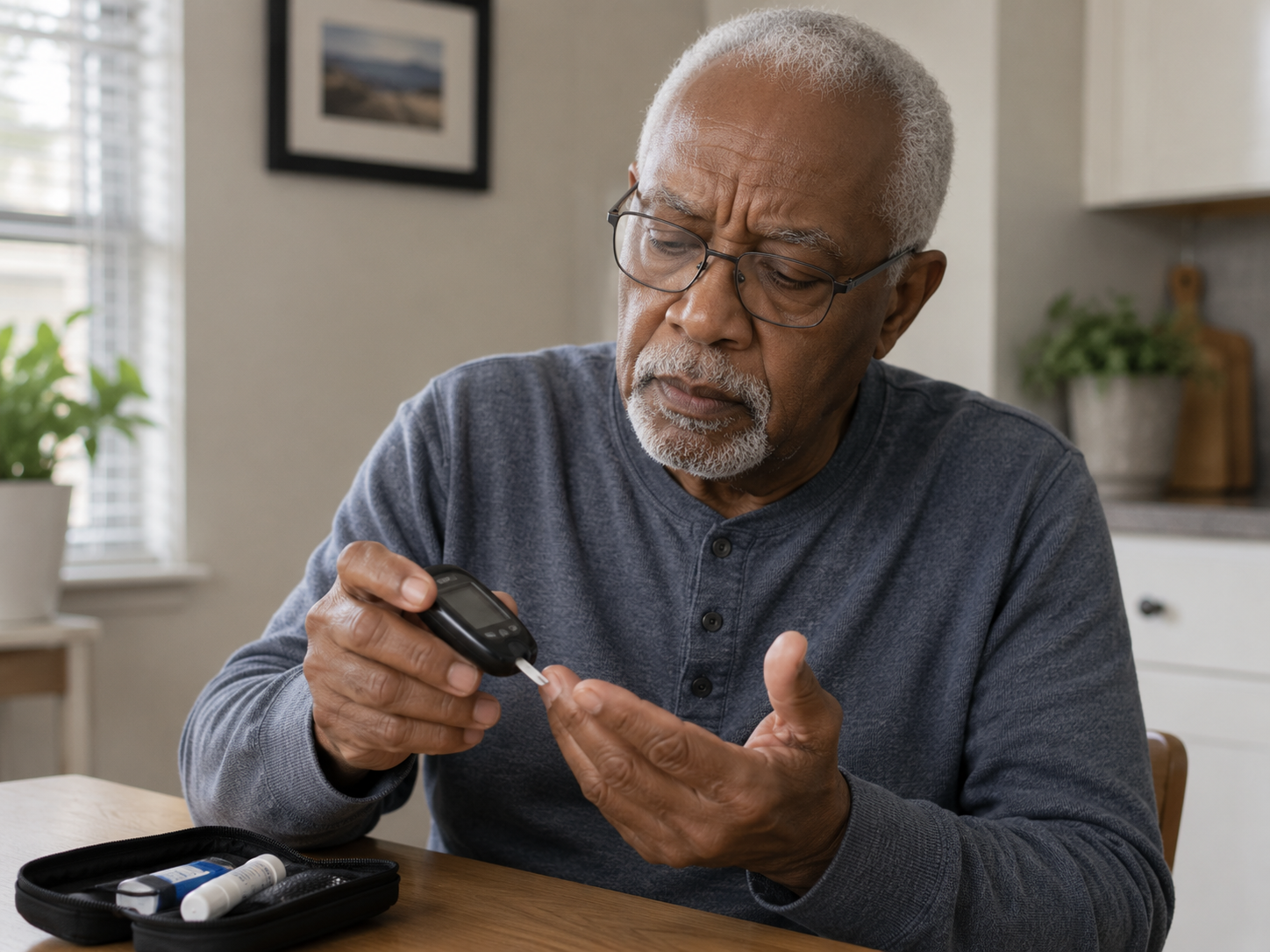
How Accurate Are Home A1C Tests? An Honest Answer
This is the question most articles answer too confidently in one direction or the other. The honest answer is: it depends on the kit type and how carefully you use it — and there are meaningful limitations worth knowing.
What the research shows
A published clinical trial of the A1CNow SelfCheck — the most widely available instant kit — found that 93.2% of self-performed home tests were within the acceptable accuracy range compared to laboratory analysis. That is reassuring for general monitoring purposes. NGSP-certified kits are designed to produce results within ±0.5 percentage points of the true value under ideal conditions, which is comparable to most standard laboratory tests.
However, a 2022 study published in Diabetes Technology & Therapeutics reviewed three commercially available home-use A1C kits and found that they did not consistently meet the full NGSP accuracy standards required of certified laboratory methods. The takeaway is not that home kits are useless — it is that they should be used for monitoring trends, not for making clinical decisions on their own.
Mail-in kits processed by CLIA-certified labs tend to be more accurate because the analysis is performed with the same instruments and quality controls used in clinical laboratories — and this distinction matters if you are trying to compare your home result directly to your doctor’s lab result.
The practical accuracy threshold
For practical use after 55, here is how to think about a home result. If your home kit reads 5.9%, your true A1C is likely somewhere between 5.4% and 6.4% — the result is meaningful directionally but cannot reliably distinguish, for example, between 5.8% and 6.1%. For tracking whether your number is moving in the right direction over several months, that range is useful. For making a diagnosis or a major treatment decision, it is not precise enough.
Conditions That Can Make Your A1C Read Falsely High or Low
This section matters particularly for adults over 55, because several of the conditions that distort A1C results are more common in older adults. If any of the following applies to you, your A1C reading — whether from a home kit or a lab — may not accurately reflect your true average blood sugar, and your doctor needs to know.
The A1C test works by measuring glucose attached to haemoglobin in red blood cells. Any condition that affects how long red blood cells live or how many red blood cells are in circulation can distort the result. According to the National Glycohemoglobin Standardization Program (NGSP) — the body that sets accuracy standards for all A1C testing in the US — and the published limitations of A1C testing, the following conditions can interfere with accuracy.
Conditions that can cause A1C to read FALSELY HIGH
- Iron deficiency anaemia (low iron causing low red blood cell production) — very common in older adults. Low iron slows red blood cell turnover, leaving older cells in circulation longer and allowing more glucose to attach to haemoglobin. Studies have found A1C can read up to 1.2 percentage points higher in iron-deficient individuals than their actual blood sugar warrants.
- Vitamin B12 deficiency anaemia — also common after 55, as B12 absorption decreases with age. Slows red blood cell production in a similar way to iron deficiency.
- Folate (vitamin B9) deficiency anaemia — same mechanism as B12 deficiency.
- Chronic kidney disease — affects red blood cell production and lifespan, and is more prevalent in older adults with elevated blood sugar.
Conditions that can cause A1C to read FALSELY LOW
- Haemolytic anaemia — a condition where red blood cells are destroyed faster than normal (haemolysis means red blood cell destruction). With a shorter red blood cell lifespan, there is less time for glucose to attach, so A1C reads lower than actual blood sugar.
- Sickle cell disease — A1C cannot be measured reliably in people with homozygous sickle cell disease (HbSS) at all, according to the ADA’s 2026 Standards of Care, because these individuals lack the type of haemoglobin the test measures.
- Recent significant blood loss or blood transfusion — introduces new red blood cells that have not been exposed to your blood sugar, which can lower A1C artificially.
- Pregnancy — affects red blood cell turnover and can alter A1C readings.
How to Interpret Your Results — What the Numbers Mean
Getting a number back from your home test is only useful if you know what to do with it. Here is a practical guide to interpreting your result and deciding on your next step.
If your result is below 5.7%
This is in the normal range according to ADA and CDC guidelines. If you have been making lifestyle changes, a reading below 5.7% is a strong positive signal. Continue what you are doing. Confirm with a lab test at your next scheduled doctor visit. Retest at home in three months.
If your result is 5.7%–6.4%
This is the prediabetes range. For adults over 55, being anywhere in this bracket means blood sugar management deserves active attention. The encouraging reality is that the prediabetes range is highly responsive to lifestyle changes — diet, movement, sleep quality, and stress management all have documented, measurable effects at this stage. For more on understanding what being in this range means and what the evidence shows about moving out of it, our guide to what is prediabetes and can you reverse it naturally covers the full picture.
If you are in this range, share the result with your doctor at your next appointment. The ADA recommends annual A1C testing for anyone in the prediabetes bracket — which means a confirmed lab test once a year, not just home monitoring.
If your result is 6.5% or above
A home reading at or above 6.5% warrants a conversation with your doctor sooner rather than later, not because the home result is definitive — it is not — but because a result in this range needs to be confirmed with a laboratory test and properly assessed by your healthcare team. Do not wait for a scheduled appointment that is months away. Contact your doctor’s office and let them know your home reading.
If your result seems inconsistent with your daily readings
If your home A1C reads significantly higher than you would expect based on the blood sugar readings you take each day with a fingerstick glucose monitor, this discrepancy is worth flagging with your doctor. As discussed in the section above, certain conditions — particularly iron deficiency anaemia and kidney disease — can cause A1C to read falsely elevated. This is especially worth raising if you have been told you are anaemic or if you take regular anti-inflammatory pain medications.
For a detailed breakdown of what normal A1C looks like at different ages and what your individual target should be, our article on normal A1C levels for seniors covers the diagnostic and age-adjusted targets in detail. And for the broader context of what blood sugar numbers actually mean day to day, our guide to normal blood sugar levels after 55 explains how A1C and daily readings fit together.
How Often Should You Test at Home?
There is a practical limit to how frequently home A1C testing is useful — and understanding it will save you money and prevent you from obsessing over week-to-week noise in your readings.
Because A1C reflects your average blood sugar over the past two to three months, testing more frequently than every four to six weeks gives you very limited additional information. Your A1C from today and from three weeks ago are measuring largely overlapping time periods. The number will not have changed meaningfully in that short a window — even if your diet and lifestyle have improved significantly.
A practical home testing schedule
| Situation | Suggested Home Test Frequency | Lab Test (doctor-ordered) |
|---|---|---|
| Normal A1C, monitoring for awareness | Every 3–6 months | Every 1–3 years (as recommended by doctor) |
| Prediabetes range — actively making lifestyle changes | Every 2–3 months | At least annually |
| Diagnosed diabetes — on medication, stable | Every 6–8 weeks between appointments | At least twice a year (ADA recommendation) |
| Diagnosed diabetes — recently changed medications or diet | Every 6–8 weeks to track response | As directed by your doctor |
- Home A1C testing is a genuine option for monitoring your three-month blood sugar average between doctor visits. Two types are available: instant fingerstick kits (results in 5 minutes) and mail-in kits analysed by CLIA-certified labs (more accurate, results in 2–5 days).
- Technique matters more than most people realise — expiry dates, blood volume, storage temperature, and the fingerstick technique all affect accuracy. Following instructions precisely gives you the most reliable result the kit can produce.
- Home kits are useful for tracking trends, not for making clinical decisions. A home reading at or above 6.5% should prompt a conversation with your doctor, not a treatment change on its own.
- Several common conditions in older adults — particularly iron deficiency anaemia, B12 deficiency, and chronic kidney disease — can cause A1C to read falsely high. If your daily glucose readings seem inconsistent with your A1C result, mention this to your doctor and ask for a full blood count.
- Testing every 4–6 weeks at most is appropriate for home monitoring. More frequent testing does not add information, because A1C is a 90-day average — the number cannot shift meaningfully in a shorter window.
- Home testing never replaces the laboratory test ordered by your doctor. It complements it — giving you more data points between appointments to stay informed and motivated.
Get Our Free Guide: 7 Natural Ways to Help Support Healthy Blood Sugar After 55
Join adults over 55 who receive our free weekly blood sugar guide — practical, honest strategies including what your A1C numbers actually mean for your health.
Frequently Asked Questions
Can I test my A1C at home without a doctor’s order?
Yes. Home A1C test kits are available over the counter at major pharmacies including CVS, Walgreens, and Walmart, as well as online through Amazon and directly from manufacturers. No prescription or doctor’s order is required. However, if your home result falls in the prediabetes or diabetes range, sharing that result with your doctor for a confirmatory lab test is strongly recommended before making any decisions about treatment or significant changes to your health management.
Do I need to fast before a home A1C test?
No. Unlike a fasting blood glucose test, the A1C test does not require fasting. It measures a three-month average of blood sugar, so a single meal will not affect the result. You can eat and drink normally before testing. This is one of the practical advantages of A1C testing over daily glucose monitoring — no need to plan around meals.
How accurate are home A1C tests compared to a lab test?
NGSP-certified instant kits are designed to be accurate within approximately ±0.5 percentage points under ideal conditions. Clinical trials of the most widely available kit showed 93% of self-performed results within the acceptable accuracy range compared to laboratory analysis. However, a 2022 study found that some commercially available home kits do not fully meet NGSP standards. Mail-in kits analysed in CLIA-certified labs tend to be more accurate because the analysis is performed with clinical-grade equipment. Home kits are reliable enough for trend-tracking, but the definitive result remains the lab test ordered by your doctor.
My home A1C reading is much higher than I expected — what should I do?
First, check whether technique or kit issues could explain the result: confirm the cartridge was not expired, that the blood sample was of sufficient volume, and that you followed the steps correctly. If you repeat the test with a fresh cartridge and get a similar result, contact your doctor’s office promptly rather than waiting for your next scheduled appointment. A1C at or above 6.5% warrants a confirmatory lab test and a proper medical assessment. Also mention to your doctor if you have been told you are anaemic or if you take regular anti-inflammatory medications — these can cause A1C to read higher than your actual blood sugar warrants.
Can I use my home A1C results to adjust my diabetes medication?
No. Medication adjustments should never be based on home A1C kit readings alone. Home kits have a margin of error that makes them unsuitable as the sole basis for treatment decisions. They are monitoring tools, not diagnostic instruments. If you believe your medication needs reviewing, bring your home results as supporting information for a conversation with your doctor — but the clinical decision must be based on properly conducted laboratory testing and a full medical assessment.