

Founder, HealthAfter55.com — Richard researches natural health strategies for adults over 55, with a focus on blood sugar, energy, and healthy ageing. He is not a medical professional. Always consult your doctor before making health changes.

What is prediabetes — and what does it actually mean for you? If your doctor has told you your blood sugar is “a little high,” “borderline,” or “in the prediabetes range,” this article gives you the honest, complete answer to that question. Not the watered-down version. The real picture — including the part most health articles leave out.
According to the CDC’s National Diabetes Statistics Report, 115.2 million American adults currently have prediabetes — and 31.3 million of those aged 65 and older, representing 52.1%, have the condition. More than 8 in 10 adults with prediabetes do not know they have it. If you are over 55 and have been told your blood sugar numbers are creeping upward, you are in the largest single health cohort in the country.
Here is the part most articles miss: prediabetes is not a one-way street to type 2 diabetes. A landmark 2025 analysis of 19 large international cohort studies — involving millions of people — found that reversion to normal blood sugar was more common than progression to type 2 diabetes among adults with prediabetes. And the Diabetes Prevention Program — the most important clinical trial on this topic ever conducted — found that adults aged 60 and older who made lifestyle changes reduced their risk of developing type 2 diabetes by a remarkable 71%. Not 58% like the overall group. Older adults did better, not worse.
This guide covers everything you need to understand about prediabetes — what it is, how it develops, what the numbers mean, and what the evidence shows about reversing it naturally after 55.
🗓️ Last reviewed and updated: June 2026
Prediabetes means your blood sugar is higher than normal but not yet high enough for a type 2 diabetes diagnosis. It is caused by insulin resistance — cells not responding properly to insulin — and is extremely common after 55. The critical fact most people are not told: prediabetes is reversible. A 2025 Lancet Global Health analysis found that more people with prediabetes revert to normal blood sugar than progress to type 2 diabetes. Adults aged 60+ in the Diabetes Prevention Program reduced their diabetes risk by 71% through lifestyle changes — a better result than younger adults. You have more time and more options than you may have been led to believe.
Get Our Free Guide: 7 Natural Ways to Help Support Healthy Blood Sugar After 55
Practical, research-backed strategies for adults over 55 — including what to do if you have been told your blood sugar is in the prediabetes range.
- What Is Prediabetes? A Plain English Explanation
- What the Blood Test Numbers Actually Mean
- How Prediabetes Develops — and Why It Is More Common After 55
- Prediabetes Symptoms — Why Most People Feel Fine
- What Happens If Prediabetes Is Left Untreated
- Can Prediabetes Be Reversed Naturally? The Evidence
- How to Reverse Prediabetes After 55 — What Actually Works
- What to Do in the First 30 Days
- Frequently Asked Questions
What Is Prediabetes? A Plain English Explanation
Prediabetes is a condition where blood sugar levels are higher than normal — but not yet high enough to be classified as type 2 diabetes. Think of it as a warning zone: a clear signal that the way your body is managing blood sugar has changed, and that without some deliberate action, the risk of progressing to type 2 diabetes is real.
The underlying cause of prediabetes is almost always insulin resistance — a condition where your cells have stopped responding properly to insulin, the hormone that moves sugar from your blood into your cells for energy. When cells resist insulin’s signal, sugar stays in the bloodstream longer than it should. Your pancreas — the gland that produces insulin — tries to compensate by producing more of it. For a while this works, and blood sugar stays roughly normal despite the resistance. But eventually the pancreas cannot keep up, and blood sugar starts climbing. That elevated-but-not-yet-diabetic range is prediabetes.
The National Institute of Diabetes and Digestive and Kidney Diseases defines prediabetes as blood sugar that is higher than normal but not yet at the diabetes threshold — a state that indicates the body’s glucose management system is under significant strain but has not yet failed.
What Is Prediabetes? Understanding What the Blood Test Numbers Mean
Prediabetes is diagnosed through blood tests, not symptoms. There are three tests your doctor can use, and you may have had one or more of these at a routine check-up without realising they were screening for prediabetes.
| Test | What It Measures | Normal | Prediabetes | Diabetes |
|---|---|---|---|---|
| Fasting blood glucose | Blood sugar after 8+ hours without eating | Below 5.6 mmol/L (100 mg/dL) | 5.6–6.9 mmol/L (100–125 mg/dL) | 7.0+ mmol/L (126+ mg/dL) |
| HbA1c | Average blood sugar over the past 3 months | Below 5.7% | 5.7%–6.4% | 6.5% or above |
| Oral glucose tolerance test | Blood sugar 2 hours after a sugary drink | Below 7.8 mmol/L (140 mg/dL) | 7.8–11.0 mmol/L (140–199 mg/dL) | 11.1+ mmol/L (200+ mg/dL) |
The HbA1c test — sometimes written as A1C or glycated haemoglobin — is the most commonly used test for prediabetes screening in adults over 55 because it does not require fasting, can be done at any time of day, and reflects average blood sugar over three months rather than a single snapshot. A result between 5.7% and 6.4% means your 3-month average blood sugar has been elevated — enough to indicate that insulin resistance is present and progressing.
How Prediabetes Develops — and Why It Becomes More Common After 55
Prediabetes does not appear overnight. It develops gradually, over years, through a process that is driven by insulin resistance — and after 55, several biological changes accelerate that process significantly.
The progressive development of prediabetes
The process typically unfolds over a decade or more. Cells in the muscle, liver, and fat tissue gradually become less responsive to insulin. The pancreas compensates by producing more insulin — maintaining roughly normal blood sugar but under increasing strain. Eventually, the compensation becomes insufficient. Blood sugar starts rising into the prediabetes range. The pancreas is working harder than it should, and if nothing changes, it will eventually struggle to keep up entirely — at which point blood sugar crosses into the type 2 diabetes range.
The critical insight: the window of prediabetes — when blood sugar is elevated but not yet diabetic — is the most important intervention window. The pancreas still has significant function. Blood sugar is still responsive to lifestyle changes. The trajectory is still highly malleable.
Why prediabetes accelerates after 55
Four biological changes make prediabetes significantly more likely to develop — and more difficult to manage — after 55:
- Declining muscle mass (sarcopenia) — muscle is the primary glucose disposal site, absorbing blood sugar after meals. After 55, most adults lose muscle at 1–2% per year. Less muscle means less capacity to clear blood sugar, directly worsening insulin resistance.
- Hormonal changes — in women, the oestrogen decline of menopause shifts fat storage from the hips and thighs to the abdomen. Visceral fat — fat around the internal organs — directly produces inflammatory compounds that worsen insulin resistance. In men, declining testosterone similarly increases abdominal fat and reduces muscle mass.
- Reduced physical activity — movement levels naturally decline after 55 due to joint pain, fatigue, caregiving demands, or habit. Physical activity is one of the most powerful stimulants of glucose uptake — every time muscles work, they absorb blood sugar directly, independent of insulin. Less movement means less of this backup capacity.
- Pancreatic ageing — the insulin-producing cells in the pancreas become less efficient with age, meaning the compensatory response to insulin resistance is somewhat weaker in older adults than in younger ones.
Understanding these drivers matters, because the most effective natural treatments for prediabetes after 55 directly target them — particularly resistance training for muscle preservation and dietary protein for muscle support.
Prediabetes Symptoms — Why Most People Feel Completely Fine
The most important thing to understand about prediabetes symptoms is that, for most adults, there are none. Prediabetes usually causes no pain, no obvious physical change, and no clear signal that anything is wrong. This is why the vast majority of adults with prediabetes — more than 80% — do not know they have it.
Some adults may notice subtle signs over time — but these are easy to dismiss as normal ageing:
- Energy crashes after meals — particularly after carbohydrate-heavy meals, as blood sugar spikes and then drops more sharply than normal
- Persistent carbohydrate cravings — because cells are not absorbing glucose efficiently, the brain signals hunger for more quick energy
- Gradual waistline expansion — even without significant overall weight gain, abdominal fat accumulates as insulin resistance worsens
- Brain fog — emerging research links insulin resistance to cognitive changes even before blood sugar reaches the diabetes threshold
- Skin changes — dark, velvety patches on the back of the neck or armpits, a condition called acanthosis nigricans (pronounced ah-kan-THO-sis NIH-grih-kans), caused by high insulin levels stimulating skin cell growth
None of these signs are definitive. The only reliable way to know if you have prediabetes is a blood test. If you are over 55 and have not had a fasting blood glucose or HbA1c test in the past year, asking for one at your next appointment is the single most important action you can take.
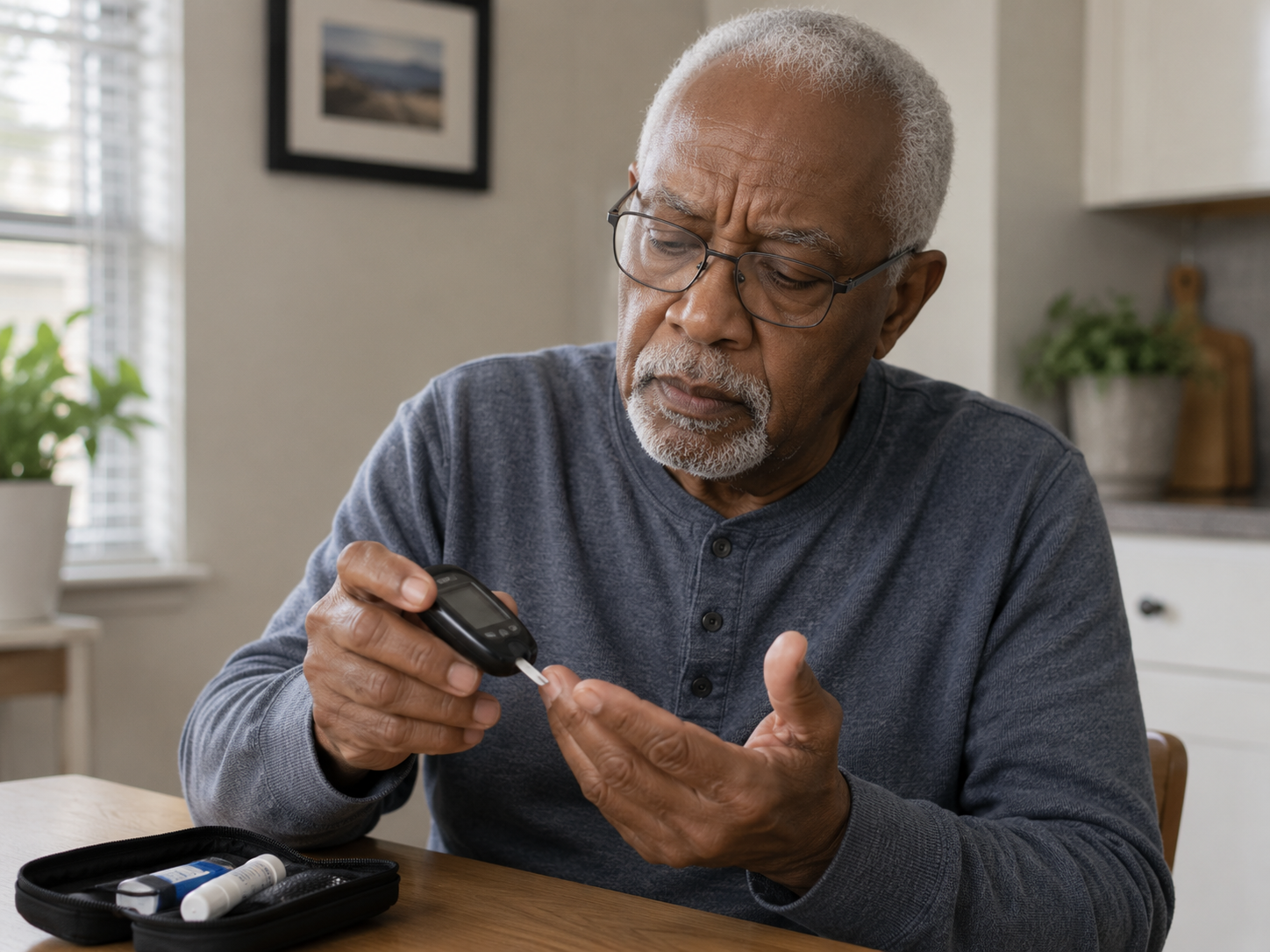
What Happens If Prediabetes Is Left Untreated
Being clear about the risks of untreated prediabetes is important — not to alarm, but because understanding what is at stake is part of what motivates the changes that make a genuine difference.
Progression to type 2 diabetes
Without intervention, a significant proportion of adults with prediabetes will develop type 2 diabetes — typically within 5–10 years. The exact proportion varies between studies and depends heavily on where in the prediabetes range your numbers sit, your age, weight, and activity level. Research suggests up to 50% of adults with untreated prediabetes will progress to type 2 diabetes within 5 years. Importantly, this also means at least half do not — and with lifestyle intervention, the proportion who progress drops dramatically.
Cardiovascular risk — often overlooked
Prediabetes is not just a blood sugar problem. Even before blood sugar reaches the diabetes threshold, elevated glucose and insulin resistance damage blood vessels, increase inflammation, raise blood pressure, and worsen cholesterol profiles. Adults with prediabetes have a significantly elevated risk of heart attack and stroke — independently of whether they progress to type 2 diabetes. This cardiovascular risk is one of the most important and most underappreciated aspects of the condition for adults over 55.
Kidney and nerve health
Early changes in kidney function and nerve health — similar in mechanism to the complications of diabetes — can begin during the prediabetes stage. These are typically silent and reversible if caught and addressed early, but they add to the case for taking prediabetes seriously rather than treating it as a “almost-but-not-quite” situation.
Can Prediabetes Be Reversed Naturally? What the Evidence Shows
Yes — and the evidence for this is stronger and more encouraging than most health articles convey.
A landmark 2025 analysis published in The Lancet Global Health pooled individual data from 19 large prospective cohort studies — long-term research studies that tracked large groups of people over time — representing diverse populations across Asia, Australia, Europe, and the Americas — and found that reversion to normal blood sugar was more common than progression to type 2 diabetes among adults with prediabetes. That finding is more optimistic than most people with a prediabetes diagnosis are led to believe. Prediabetes naturally reverts more often than it progresses — and with deliberate lifestyle intervention, the reversal rates improve significantly.
The Diabetes Prevention Program — the gold standard evidence
The landmark clinical trial on this question is the Diabetes Prevention Program — a large, long-term randomised controlled trial involving 3,234 adults with prediabetes. It compared three groups: a lifestyle intervention group, a metformin medication group, and a placebo group (a group given a dummy pill with no active ingredients, used as a control comparison). The results were clear:
- The lifestyle group reduced diabetes risk by 58% — more than double the effect of metformin (31%)
- Adults aged 60 and older reduced diabetes risk by 71% — significantly better than the overall group result
- The lifestyle intervention involved 150 minutes of moderate activity per week and a 5–7% reduction in body weight — not extreme measures
- The benefits persisted for 15 years of follow-up — not just for the duration of the active intervention
The ADA’s current position
The American Diabetes Association’s 2025 Standards of Care — the most authoritative annual clinical guidance document for diabetes management — recommends lifestyle intervention as the first-line approach for adults with prediabetes. Specifically, it recommends achieving and maintaining 7% body weight loss and 150 minutes of moderate physical activity per week as the primary targets. These are achievable, not extreme.
How to Reverse Prediabetes Naturally After 55 — What Actually Works
The DPP lifestyle intervention that produced a 71% diabetes risk reduction in adults 60+ was built around five components. None of them are extreme. All of them are available to most adults over 55 without specialist equipment, gym memberships, or medical supervision — though involving your doctor in monitoring progress is strongly recommended.
1. Resistance training — the most critical intervention after 55
Muscle tissue is your primary glucose disposal site. Every kilogram of muscle you maintain or build increases your body’s capacity to absorb blood sugar after meals. After 55, you are losing muscle at an accelerating rate — and this muscle loss is the primary driver of the worsening insulin resistance that underlies prediabetes. Resistance training directly addresses this root cause in a way no diet or supplement can.
A 2025 meta-analysis of 43 randomised controlled trials in adults aged 50 and over found that resistance training produced significant reductions in blood glucose, HbA1c, and insulin resistance, alongside increases in muscle mass. Three sessions per week — even with light weights, resistance bands, or bodyweight — showed the most consistent results. You do not need a gym.
2. Regular aerobic movement — especially after meals
Brisk walking, cycling, swimming — 150 minutes per week total, spread across most days. During aerobic movement, muscles absorb glucose directly without needing insulin, making it an immediate and powerful blood sugar management tool. A 10–15 minute walk after dinner is one of the simplest, most evidence-backed starting points for adults who are currently inactive. Build from there toward the 150-minute weekly target.
3. Reducing refined carbohydrates
Refined carbohydrates — white bread, white rice, pastries, most breakfast cereals, sugary drinks — digest rapidly and cause large blood sugar spikes that demand a large insulin response. Over years, this cycle drives the insulin resistance that causes prediabetes. Replacing refined carbohydrates with slower-digesting alternatives (wholegrain bread, brown rice, lentils, sweet potato) reduces the insulin demand at every meal and gives the pancreas a chance to recover.
4. Increasing protein
For adults over 55, protein is a more important dietary component than most prediabetes guides acknowledge. Adequate protein — around 1.2–1.6 g per kg of body weight daily, significantly above the standard 0.8 g recommendation — supports the muscle mass that absorbs blood sugar, reduces post-meal blood sugar responses by slowing digestion, and helps preserve muscle during any weight loss. At every meal, protein should be the starting point.
5. Improving sleep quality
Even one night of poor sleep measurably reduces insulin sensitivity the following day. Chronic poor sleep — extremely common after 55 — consistently worsens blood sugar control independently of diet and exercise. Sleep apnoea (where breathing repeatedly pauses during sleep), which is more prevalent after 55, directly worsens prediabetes and is worth investigating if you or your partner notices snoring, gasping, or consistently unrefreshing sleep.
6. Modest weight loss — done the right way
A 5–7% reduction in body weight — for a 90 kg adult, that is 4.5–6.3 kg — produces significant improvements in insulin sensitivity and was the weight loss target in the DPP that produced the 71% risk reduction in older adults. Crucially, weight loss after 55 needs to be done with resistance training and adequate protein to prevent muscle loss alongside fat loss. Crash dieting without these components can worsen the insulin resistance driving prediabetes even while the number on the scale falls.
What to Do in the First 30 Days After a Prediabetes Diagnosis
Most articles end with “talk to your doctor.” That is necessary but not sufficient. Here is a practical 30-day framework for adults over 55 who have just been told their blood sugar is in the prediabetes range.
| Week | Action | Why It Matters |
|---|---|---|
| Week 1 | Book a follow-up with your doctor. Confirm your HbA1c and fasting glucose numbers. Ask about a referral to a Diabetes Prevention Program if one is available in your area. | Understanding your exact numbers tells you where in the prediabetes range you sit — which affects urgency and targets. |
| Week 1 | Start a 10–15 minute walk after dinner every night. No equipment, no gym, immediate effect on post-meal blood sugar. | The fastest-acting, lowest-barrier intervention available. Produces measurable blood sugar reduction from the very first walk. |
| Week 2 | Make one dietary swap: replace sugary drinks and white bread with water and wholegrain alternatives. Just this — not a full diet overhaul. | Eliminating liquid sugar and reducing the highest-GI refined carbohydrates produces the most immediate dietary impact with the least disruption. |
| Week 2–3 | Add two resistance sessions per week. Start with bodyweight exercises or resistance bands — 20 minutes, twice a week. | The highest-priority intervention for over-55s specifically. Addresses the muscle loss that is the primary driver of insulin resistance. |
| Week 3–4 | Measure your waist circumference at navel level. Record the number and remeasure monthly. Set consistent sleep and wake times. | Waist circumference is a better progress marker than scale weight for prediabetes. Sleep consistency directly improves insulin sensitivity. |
| Month 1 end | Increase protein at every meal to a palm-sized portion. Consider a home blood glucose monitor to track morning fasting readings. | Higher protein supports muscle, reduces blood sugar spikes, and reduces carbohydrate cravings. Home monitoring gives objective feedback on progress. |
These steps are not a medical treatment plan — they are a practical starting framework. Your doctor should be aware of what you are doing and should monitor your HbA1c every 3 months while you are making changes.
- Prediabetes is a condition where blood sugar is above normal but below the diabetes threshold — caused by insulin resistance and extremely common after 55 (52.1% of Americans aged 65+).
- Most people with prediabetes have no symptoms — a blood test (fasting glucose or HbA1c) is the only reliable way to detect it.
- Prediabetes is not an inevitable path to type 2 diabetes. A 2025 Lancet Global Health analysis found that reversion to normal blood sugar is more common than progression to diabetes among adults with prediabetes.
- Adults aged 60 and older in the Diabetes Prevention Program reduced their diabetes risk by 71% through lifestyle changes — a better result than the overall group (58%). Older adults are not at a disadvantage for reversal.
- The interventions with the strongest evidence are resistance training, reducing refined carbohydrates, increasing protein, regular aerobic movement, improved sleep, and modest weight loss (5–7%) that preserves muscle.
- The first 30 days should focus on the two highest-impact, lowest-barrier changes: a post-meal walk and replacing sugary drinks and white bread with better alternatives.
- Monitor progress with HbA1c every 3 months with your doctor, monthly waist measurements, and ideally a home blood glucose monitor for fasting readings.
Get Our Free Guide: 7 Natural Ways to Help Support Healthy Blood Sugar After 55
A practical guide to the lifestyle changes with the strongest evidence for reversing prediabetes naturally after 55 — including what to start this week. Delivered straight to your inbox.
Frequently Asked Questions
What is prediabetes in simple terms?
Prediabetes means your blood sugar is higher than normal but not yet high enough to be called type 2 diabetes. It means your cells have become less responsive to insulin — the hormone that moves sugar out of the bloodstream and into cells for energy. Your pancreas is working harder than it should to keep your blood sugar in check, and without some changes, the extra strain will eventually show up as type 2 diabetes. The good news is that this stage is genuinely reversible for most adults, particularly with consistent lifestyle changes.
What are the early signs of prediabetes?
Most adults with prediabetes have no obvious signs at all. The condition is usually found through routine blood testing. Some adults notice energy crashes 60–90 minutes after eating (particularly carbohydrate-heavy meals), stronger-than-normal carbohydrate cravings, a gradually expanding waistline, or dark velvety patches on the back of the neck or in the armpits — a condition called acanthosis nigricans (pronounced ah-kan-THO-sis NIH-grih-kans) caused by high insulin levels. But none of these are reliable indicators. A blood test is the only way to confirm prediabetes.
Can prediabetes be reversed naturally?
Yes — for most adults with prediabetes, returning blood sugar to the normal range through lifestyle changes is achievable. A 2025 Lancet Global Health analysis found that reversion to normal blood sugar was more common than progression to type 2 diabetes among adults with prediabetes. The Diabetes Prevention Program demonstrated a 58% reduction in diabetes risk from lifestyle changes alone — and 71% for adults aged 60 and older specifically. Reversal is not guaranteed, and results vary depending on how far into the prediabetes range your numbers are and how consistently changes are made. But the evidence is genuinely encouraging.
How long does it take to reverse prediabetes?
Post-meal blood sugar improvements can appear within days of dietary changes and adding walking after meals. Fasting blood glucose improvements typically appear within 2–4 weeks of consistent lifestyle changes. HbA1c — which reflects your 3-month average blood sugar — takes at least 3 months to show meaningful change. Most adults who make sustained lifestyle changes see significant HbA1c improvement within 3–6 months. Full reversal to normal blood sugar is achievable for many adults within 6–12 months of consistent effort, though the timeline varies significantly between individuals.
What should I eat if I have prediabetes?
The dietary approach with the strongest evidence for prediabetes is the Mediterranean pattern — built around vegetables, legumes, fish, olive oil, whole grains, and nuts, with limited refined carbohydrates and processed food. For adults over 55 specifically, protein intake is a critical component that standard prediabetes diet guides underemphasise: aim for 1.2–1.6 g of protein per kg of body weight daily to support the muscle mass that absorbs blood sugar. The highest-priority dietary change is replacing sugary drinks and refined carbohydrates with water and slower-digesting alternatives — this single change reduces insulin demand at every meal. For more detail, our article on snacks for prediabetes covers practical food choices in detail.
Is honey bad for prediabetes?
Honey is a natural sugar and raises blood sugar significantly — it is not a safe alternative to regular sugar for people with prediabetes despite its reputation as a “healthier” sweetener. Honey has a similar glycaemic effect to table sugar, though some varieties have a marginally lower glycaemic index. For adults with prediabetes, honey should be treated the same as other added sugars — used in very small amounts on occasion, not as a daily sweetener. Our article on whether honey is bad for type 2 diabetes covers the evidence in detail.
What is the difference between prediabetes and insulin resistance?
Insulin resistance is the underlying condition — cells not responding properly to insulin — and prediabetes is one of its consequences. Most people with prediabetes have insulin resistance driving it. But insulin resistance can be present for years before blood sugar rises into the prediabetes range, because the pancreas compensates by producing more insulin. Once the pancreas can no longer fully compensate and blood sugar climbs, prediabetes develops. Addressing insulin resistance through lifestyle changes treats the root cause of prediabetes, not just the blood sugar number. Our guide to insulin resistance symptoms covers the relationship between the two conditions in more detail.