

You’ve checked your numbers. You’ve changed what you eat. You’ve been careful. And yet your blood sugar still won’t come down — and you’re not sure why. If that sounds familiar, you’re not alone.
For adults over 55, persistently high blood sugar is one of the most frustrating health challenges there is. Understanding why your blood sugar won’t go down — and what you can actually do about it — can make a real difference to how you feel day to day.
This guide covers the most common reasons blood glucose stays elevated after 55, including some that often get overlooked. It’s practical, honest, and written in plain English — no jargon, no scare tactics.
Free Guide: 7 Natural Ways to Help Support Healthy Blood Sugar After 55
If blood sugar management is something you want to get on top of, this free guide covers the most practical, research-backed strategies — written specifically for adults over 55.
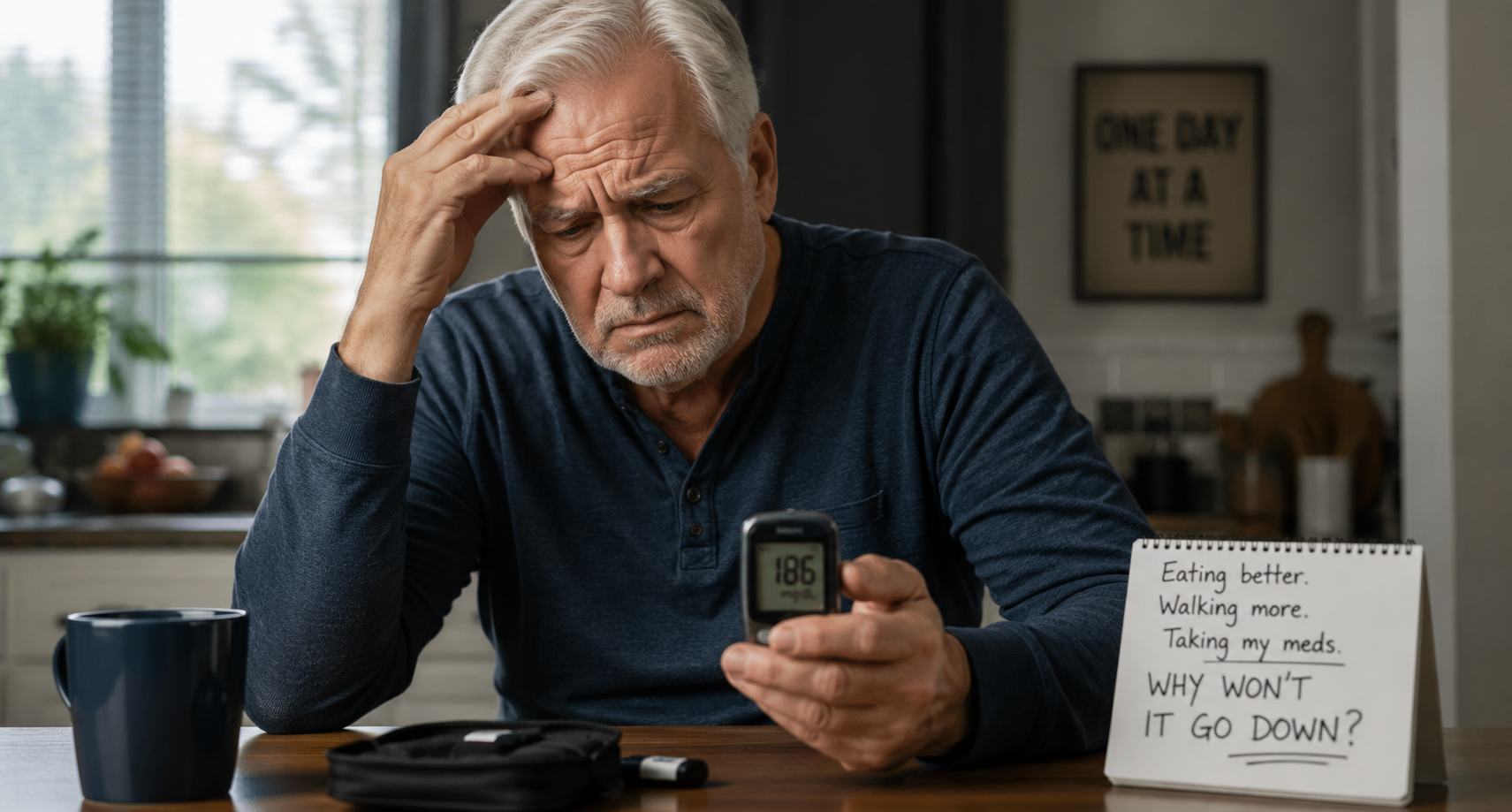
If your blood sugar won’t go down, the most likely causes include what and when you’re eating, insufficient physical activity, poor sleep, chronic stress, certain medications, or an underlying condition affecting insulin sensitivity. After 55, several age-related changes can make blood sugar harder to control — but most of these causes are addressable once you identify them.
Why Blood Sugar Is Harder to Control After 55
Before diving into specific causes, it helps to understand why blood sugar management becomes more challenging as we age. This isn’t a personal failing — it’s biology.
After 55, the pancreas produces insulin less efficiently. At the same time, your body’s cells become less responsive to the insulin that is produced — a process called insulin resistance. The result is that glucose lingers in the bloodstream longer than it should.
Muscle mass also naturally declines with age. This matters because muscle tissue is one of the primary places your body stores glucose after a meal. Less muscle means less capacity to absorb blood sugar effectively.
On top of that, many adults over 55 are dealing with more medications, more health conditions, and more disrupted sleep — all of which can affect blood glucose. So if you’re asking why won’t my blood sugar go down, the answer is often layered.
Understanding what’s normal — and what’s not — at your age is a useful starting point. Our guide to what blood sugar levels mean after 55 covers the numbers in detail.
The Most Common Reasons Blood Sugar Stays High
Most cases of persistently elevated blood sugar come down to one or more of these factors. Work through them honestly — chances are at least one applies to you.
1. What You’re Eating Is Raising Glucose More Than You Realise
Many foods that seem “healthy” can still spike blood sugar significantly. White bread, rice, fruit juice, flavoured yoghurt, and low-fat packaged foods often contain more sugar or refined carbohydrates than people expect.
Portion size matters too. Even wholesome foods like brown rice, oats, or bananas can push glucose higher when eaten in larger quantities. After 55, your body processes carbohydrates more slowly — so the same meal that was fine at 45 may have a larger effect now.
2. Meal Timing and Eating Patterns
Skipping meals — particularly breakfast — can cause blood sugar to spike sharply at the next meal. Eating large amounts in one sitting has a similar effect. Spreading your food more evenly across the day gives your body a better chance of processing glucose steadily.
Late-night eating is another common culprit. Insulin sensitivity is naturally lower in the evening, which means the same food eaten at 9pm may raise glucose more than the same food eaten at midday.
3. Not Enough Physical Activity
Movement is one of the most powerful tools for lowering blood sugar. When you exercise, your muscles absorb glucose directly — even without insulin. A 15–20 minute walk after meals has been shown in research to reduce post-meal blood glucose noticeably.
If you’re mostly sedentary throughout the day, blood sugar has fewer opportunities to come down between meals. Even light activity — standing, gentle stretching, short walks — helps more than most people expect.

Why Won’t My Blood Sugar Go Down? Hidden Causes Most People Miss
If you’ve already addressed diet and activity and your blood sugar still won’t go down, one of these less-obvious factors may be at play.
Chronic Stress
When you’re under stress — whether physical or emotional — your body releases cortisol and adrenaline. These hormones trigger the liver to release stored glucose into the bloodstream, raising your levels even if you haven’t eaten anything.
Chronic stress keeps this system switched on at a low level for weeks or months. If you’ve been dealing with ongoing worry, pain, or life pressure, this may be a significant contributor to elevated readings.
Poor Sleep
Research consistently links poor sleep to impaired insulin sensitivity. Even one night of disrupted sleep can raise fasting blood glucose the following morning. For adults over 55, sleep quality often declines — making this a frequently overlooked driver of blood sugar problems.
If you’re waking frequently through the night, or consistently getting under six hours, it’s worth treating this as a blood sugar issue — not just a sleep issue.
Medications That Raise Blood Sugar
Several commonly prescribed medications can raise glucose levels as a side effect. These include corticosteroids (such as prednisone), some blood pressure medications (particularly beta-blockers and thiazide diuretics), certain antidepressants, and statins in some individuals.
If you started a new medication around the time your blood sugar readings changed, speak with your doctor. Never stop or adjust medication without medical guidance — but it’s a conversation worth having.
Dehydration
When you’re not drinking enough water, blood glucose becomes more concentrated — which pushes readings higher. Many adults over 55 have a naturally reduced sense of thirst and may be mildly dehydrated without realising it. Consistent fluid intake throughout the day is a simple but genuinely useful habit.
The Dawn Phenomenon
If your fasting blood sugar is high in the morning despite eating well the day before, you may be experiencing the dawn phenomenon. In the early morning hours, the body naturally releases hormones that signal the liver to produce glucose — preparing you for the day ahead. In people with impaired insulin response, this can result in elevated morning readings that have nothing to do with what you ate the night before.
What to Eat (and Avoid) When Blood Sugar Won’t Budge
You don’t need to overhaul your entire diet at once. Small, consistent changes tend to work better than dramatic restrictions that are hard to sustain.
The general principle is straightforward: slow the rate at which glucose enters your bloodstream. Foods that do this best are high in fibre, protein, and healthy fats. Foods that spike glucose rapidly tend to be high in refined carbohydrates and low in fibre.
| Eat More Of | Eat Less Of |
|---|---|
| Non-starchy vegetables (broccoli, spinach, zucchini) | White bread, white rice, pasta |
| Lean protein (chicken, fish, eggs, legumes) | Sugary drinks and fruit juice |
| Healthy fats (avocado, olive oil, nuts) | Packaged snacks and baked goods |
| High-fibre foods (oats, lentils, flaxseed) | Sweetened cereals and flavoured yoghurt |
| Water and unsweetened herbal tea | Alcohol (especially beer and sweet wine) |
Vinegar (particularly apple cider vinegar) has shown some promise in small studies for reducing post-meal glucose when taken before meals. The evidence is modest but the risk is low. If you try it, dilute 1–2 teaspoons in a glass of water — never drink it straight.
Lifestyle Changes That Can Make a Real Difference

Diet gets most of the attention, but lifestyle factors are equally important — especially after 55. Here are the ones with the strongest evidence behind them.
Walk After Meals
A 10–20 minute walk within an hour of eating is one of the most effective interventions for post-meal blood sugar. Your muscles use glucose for fuel during movement, pulling it out of the bloodstream naturally. This is particularly effective after dinner, which is typically the largest meal of the day.
Prioritise Sleep
Aim for 7–8 hours of quality sleep. Consistent sleep and wake times — even on weekends — help regulate the hormonal patterns that influence blood sugar. If you’re struggling with sleep, speak to your doctor before trying supplements or sleep aids.
Manage Stress Actively
Chronic stress is a blood sugar issue as much as a mental health one. Even simple practices — ten minutes of slow breathing, a gentle walk, time in nature — can reduce cortisol levels over time. The goal isn’t to eliminate stress, but to interrupt the chronic stress response that keeps cortisol elevated.
Stay Hydrated
Aim for 6–8 glasses of water a day. Keep a glass of water beside you during the day as a reminder. If plain water feels boring, herbal teas — particularly cinnamon or green tea — are worth trying, as some research suggests they may offer modest blood sugar benefits.
To understand what healthy blood sugar patterns look like specifically for your age group, see our article on signs of blood sugar imbalance after 55 — it covers what to watch for and when to act.
When to See Your Doctor
Lifestyle and diet changes can achieve a lot, but there are times when persistently high blood sugar needs medical attention — not just better habits.
See your doctor if your fasting blood sugar consistently reads above 7.0 mmol/L (126 mg/dL), if you’re experiencing symptoms like frequent urination, excessive thirst, blurred vision, or unusual fatigue, or if your readings have changed significantly without an obvious reason.
It’s also worth requesting a HbA1c test — this measures your average blood sugar over the past three months and gives a much clearer picture than day-to-day readings alone. Many people are surprised to find that what felt like “occasional highs” is actually a consistently elevated pattern.
High blood sugar is not something to manage alone indefinitely. The lifestyle steps in this article are genuine and evidence-based — but they work best alongside, not instead of, proper medical monitoring.
- After 55, insulin sensitivity naturally declines — making blood sugar harder to manage, but not impossible to control.
- The most common reasons blood sugar won’t go down include diet, inactivity, stress, poor sleep, dehydration, and certain medications.
- Post-meal walking, even for 10–15 minutes, is one of the most effective and accessible ways to lower blood glucose.
- The dawn phenomenon can cause high fasting readings that have nothing to do with what you ate — worth knowing if mornings are your problem.
- If readings consistently stay elevated despite lifestyle changes, speak with your doctor — a HbA1c test gives the clearest overall picture.
Want More Natural Blood Sugar Tips?
Join thousands of adults over 55 who receive our free weekly blood sugar guide — practical tips, honest research, and no fluff. Ever.
Frequently Asked Questions
Why is my blood sugar high in the morning even though I didn’t eat anything?
This is called the dawn phenomenon. In the early hours of the morning, your body releases hormones — including cortisol and growth hormone — that signal the liver to release stored glucose. In people with reduced insulin sensitivity, this can push fasting readings higher overnight, with no connection to what you ate the night before.
Can stress really raise blood sugar that much?
Yes — significantly. Stress hormones like cortisol directly trigger glucose release from the liver. Chronic stress keeps this mechanism partially activated, which can raise average readings noticeably over time. It’s one of the more underestimated causes of persistently elevated blood sugar.
How long does it take for lifestyle changes to lower blood sugar?
Some changes — like post-meal walking — can lower blood sugar within hours. Others, like improving sleep or reducing stress, may take several weeks to show a measurable impact. Most people see meaningful improvements in HbA1c within 2–3 months of consistent lifestyle changes, though this varies depending on individual circumstances.
What if I’m doing everything right and blood sugar still won’t go down?
If you’ve genuinely addressed diet, activity, sleep, and stress without results, it’s time to see your doctor. There may be an underlying condition affecting your insulin response, a medication interaction, or a need for adjusted treatment. Persistent high blood sugar should always be investigated medically — lifestyle changes support management, but they’re not always sufficient on their own.
Does drinking more water actually lower blood sugar?
Staying hydrated helps prevent blood glucose from becoming artificially concentrated, which can push readings higher. Water also supports the kidneys in filtering excess glucose from the bloodstream. It won’t dramatically lower blood sugar on its own, but consistent hydration is a useful and low-effort part of blood sugar management after 55.